
Author: Ana Sánchez

  • How to register as a UAS Drone Operator in 2023

    How to register as a UAS Drone Operator in 2023

    Regardless of whether you use your drone for recreational or professional flying, it is now necessary to register as a drone operator so that you can legally identify yourself to the AESA. This is a fundamental procedure, as even if you do not need a drone licence, most UAS require this procedure to be able to fly and avoid being sanctioned.

    What is UAS operator registration?

    Drone operator registration is a procedure in which the drone operator’s personal information is stored in the EASA database. In this way it is possible to keep track of all pilots and drone operators, so that their actions can be identified wherever UAS flights are performed.

    Why is it necessary to register as a drone operator?

    As of 31 December 2020, and with the entry into force of Implementing Regulation (EU) 2019/947, EASA makes it mandatory to register as a drone pilot. This registration helps to identify pilots and their drones, by means of a unique code that is assigned to each pilot who wants to become a drone operator.

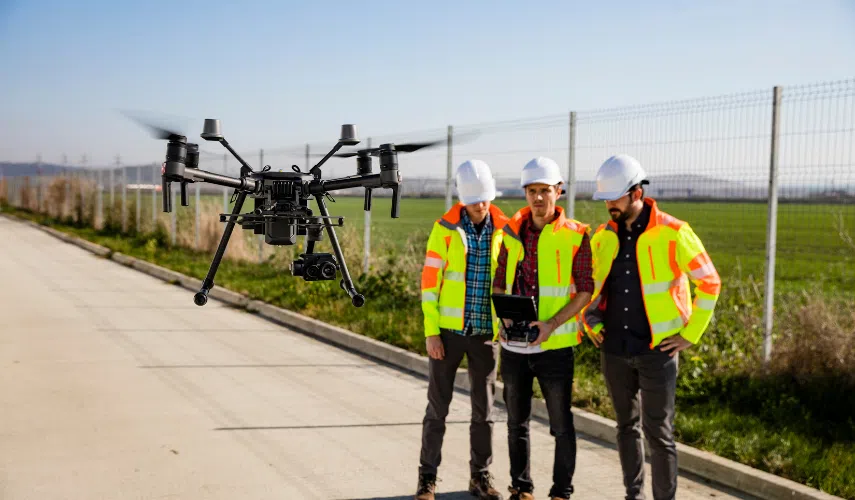
    The drone operator registration code at AESA must be placed on the different RPAS used by the pilot, by means of an identification plate that must be located in a visible area of the drone. This will make it possible to identify who owns the UAV in case it falls and gets lost or causes an accident or damage to third parties.
    registrarse como operador de drones

    Where do I register as a drone pilot?

    The regulation establishes that drone pilot registration must be carried out in the member state where the operator resides. In the case of Spain, drone pilot registration is carried out at the AESA Electronic Headquarters, by means of a series of data that must be completed and sent in order to make the application.

    How to register as a UAS drone operator?

    The process is quite simple, and can be done with or without a digital certificate. All you have to do is go to the “Catalogue of procedures and services” and select the option “UAS operator registration”.
    Before making the request, it is necessary to create an account on the platform in order to be able to follow the procedure step by step. On the same EASA platform you will find all the necessary documents to make the application, such as the “UAS Operator Registration Guide”.
    Follow the indications in this guide, filling in the data that will be requested in each part of the registration, and check back in case you have any doubts about how to fill in the registration.

    Which drones must be registered with AESA?

    There is a wide variety of types of drones depending on their use, so the AESA establishes the characteristics that drones must have in order to be registered as an operator with the AESA. Basically, they must be registered when using any of the following types of UAS:
    In operations within the ‘open’ category:
    – All those drones that have 250g or more MTOM, or in case of collision with a human are capable of transmitting a kinetic energy of more than 80 joules.
    – All drones that have elements that allow the capture of personal data, such as cameras, microphones and other information gathering sensors. This includes drones of less than 250g MTOM that are not considered as toys.
    In operations within the ‘specific’ category:
    – Using a UA of any MTOM.
    The only drones that do not require the pilot to be registered in order to use them are those that are considered as toys (Directive 2009/48/EC).
    hacerse operador de drones

    What do I need to become a drone operator?

    To become an operator of this type of aircraft, you need to prepare yourself to know how to fly a drone, through specialised drone courses like the ones we offer at UMILES University. We invite you to take a look at the most complete, the professional drone pilot course, in which you can acquire from the basic theoretical knowledge such as what a drone is for, to the technical aspects that govern the flight of this type of unmanned aircraft, such as the drone licence..


  • Can you fly a drone on the beach?

    Can you fly a drone on the beach?

    Can I fly a drone on the beach? This is one of the questions frequently asked by those who want to get impressive aerial shots in an environment of sun and sea. But before flying a drone on a beach, it is important to know the regulations and rules that apply to flying RPAS drones in this type of area.

    Regulations for the use of drones on beaches in Spain

    Current regulations indicate that you can fly a drone on the beach as long as you take into account the AESA 2023 drone regulations and standards. Therefore, the following are the highlights of the current regulations:

    • Areas within aerodrome safety distances: Drones are not allowed to fly except with aerodrome/airport coordination.
    • Flight times: You can fly both during the day and at night. However, you should be aware that night flights are subject to certain requirements: the drone must be equipped with navigation and anti-collision lights, as well as a flashing green light. In addition, the weather conditions for taking off must be favourable (no fog, no wind, no rain).
    • Maximum flight height: The height of 120 metres from the lowest point on the ground may not be exceeded.
    • Drone vision: The drone must always remain within the pilot’s line of sight (VLOS). However, if you are licensed to fly in STS-ES-02 national standard scenarios, you can move the drone further away from the pilot’s view (BVLOS).
    • Respect for privacy: You may not film private individuals without their permission. The Personal Data Protection Act must be respected.

    Find out how to obtain a drone licence in Spain in case you need to fly a special type of UAS in our professional drone pilot course.

    sobrevolar playas urbanas con drones


    How to fly a drone on the beach?

    In addition to knowing the regulations and rules that apply to flying drones on the beach, it is important to take into account other aspects when doing this type of activity, as the conditions may be harmful to the drone or you may incur fines due to ignorance.

    This is why you should take the following points into account:

    • Protect your drone: Sand poses a risk to drones, so you should avoid getting the grains to damage the device. It is best to take off and land the drone by hand or with a take-off platform.
    • Avoid bad weather: Wind and rain can complicate drone flight. It is therefore important to keep an eye on weather forecasts to avoid wasting time. Also, due to the intense sun on the beach, it is advisable to use an ND filter and avoid flying in low or high temperatures.
    • Find out about Special Protection Areas for Birds (SPAs): Many of the best beaches are categorised as SPAs, which does not mean that you cannot use a drone on the beach, but you must apply for certain permits before doing so.
    • Check flight restrictions: Flight restrictions are changeable, so it is advisable to use virtual maps such as ENAIRE drones to read NOTAMs or check if there are any impediments to carry out the project on the beach.

    If you do not know what a NOTAM is, you can go to our blog article where we explain in detail what this type of notifications are about.


    How to fly a drone in high winds?

    If you are planning to fly a drone on the beach in strong winds, there are some important factors to consider. For example, the maximum speed of your drone is essential to know how much wind it can withstand.

    If the wind is stronger than two-thirds of the drone’s maximum speed, it is likely that the drone will not be able to fly well. Also, take-off and landing can be dangerous in very windy conditions, as the drone can easily be displaced and can cause it to collide with someone.

    Therefore, during the flight, try to find places where the wind is blocked by a tall structure such as a tree or building, and don’t fly too high, as the higher the altitude the stronger the winds will be.


    Which beaches can I fly my drone over?

    There are many options for flying over urban beaches with drones, some of which require very specific permits, but others allow you to do so with fewer complications. It is true, however, that when flying in urban areas, it is necessary to notify the Ministry of the Interior at least 10 calendar days prior to the operation. That is why we have compiled three of them, so that you can take spectacular beach images with your drone, as long as you comply with all the above conditions that we have already mentioned.

    usar un dron en la playa


    A Lamiña Beach

    It is a fine white sandy beach 800 metres long and is located next to the mouth of the Miño river and on the border between Spain and Portugal. There are no restrictions on flying drones in the area and no specific permission is required, just be aware of the wind that can sometimes make flying difficult. It is also part of the Portuguese Way.

    Santa Marina Beach in Ribadesella

    This is a beautiful beach at the mouth of the river Sella, surrounded by modernist and Indian villas. At its western end there are remains of dinosaur footprints, perfect for taking photos with a drone. Moreover, no special permits are required to fly drones on the beach.

    Zarautz Beach in Guipuzcoa

    This is the largest beach on the Basque coast and very popular with surfers. It also has a lively promenade lined with bars and restaurants that make for beautiful postcard-perfect photography, which does not require special permission to fly and have fun with your drone. However, it does get quite crowded and remember that you will not be able to fly your drone if you jeopardise their safety or violate their privacy rights if your drone has a camera.

    If you want to do professional activities with your drone, do not hesitate to contact us, so that we can give you relevant information about the use of drones and the uses to which they can be put. This way you can discover interesting facts such as what photogrammetry is, as well as some tips for taking high-impact aerial photographs with drones.