Category: Uncategorized

  • The future of drones: logistics and transport drones

    The future of drones: logistics and transport drones

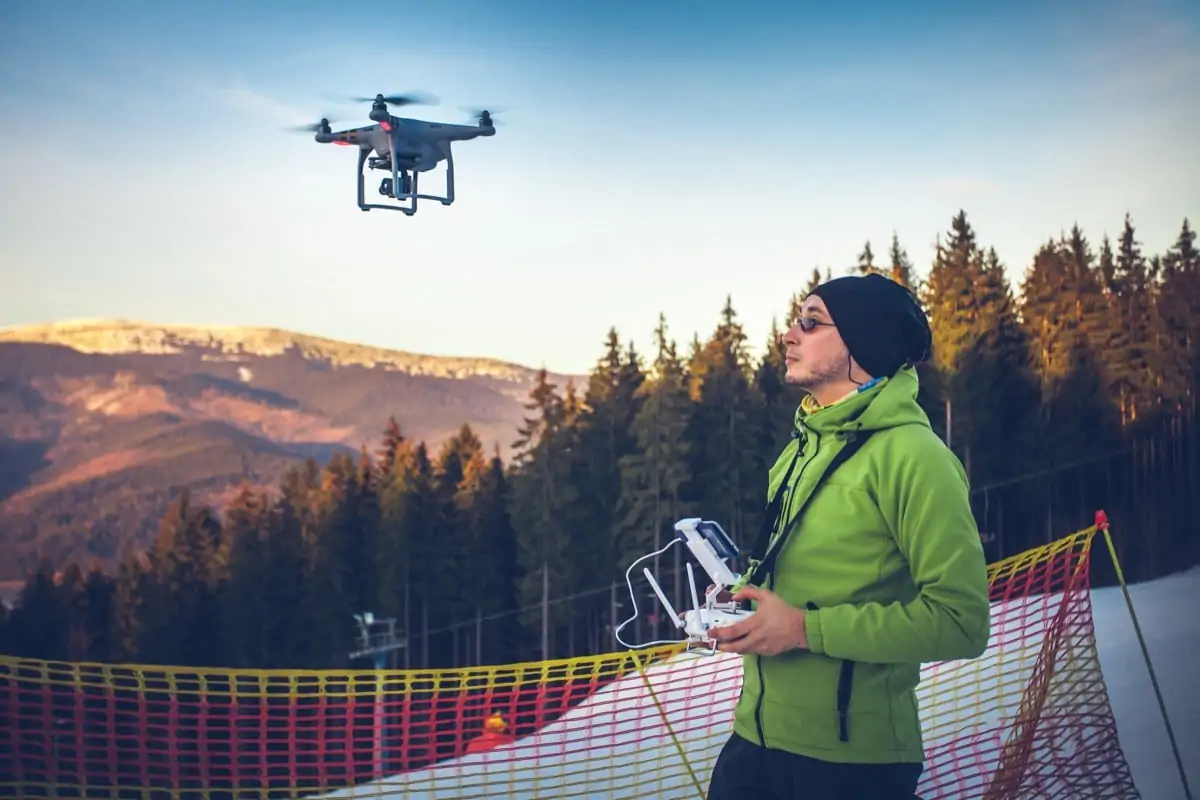
    The use of drones is becoming widespread in most major sectors, including logistics and transportation. Given their ability to reach hard-to-reach places and their speed, UAS (Unmanned Aircraft Systems) are generating high expectations in the transportation and delivery of goods.

    Drones provide new ways of working that are more agile and functional than the current ones for logistics companies. Many companies already have light drones that perform inspection and reconnaissance tasks in industrial plants, saving costs in human resources. Let’s see how UAS are used in these important sectors.

    Use of drones in logistics work 

    The use of drones to transport loads and batches within warehousing centers and industrial facilities is already a fact and will continue to develop in the coming years to improve the distribution of goods, for example, from the port to the warehouse.

    At present, drones are available with systems for transporting and unloading goods in a completely safe manner in logistics centers. They usually carry a winch that lifts up to 5kg of cargo from the moving drone, with the possibility of picking up or unloading cargo from more than 20 meters high.


    In addition, there are platforms that have been specifically designed for logistics work with a multi-drone capable of making long distance deliveries silently and accurately. The drone could carry a load of up to 6 kg and fly in headwinds of up to 50 km/h.

    Gradually, we will see drones that carry more payload weight and greater autonomy. Currently, there are already logistics aircraft capable of carrying 18 kg with a range of up to 80 minutes. In the not-too-distant future, we may see drones working in these capacities:

    • Transporting goods between hubs.
    • Creating new cargo routes to alleviate ground traffic.
    • Moving tools with drones in industrial, agricultural, mining and other plants.

    Drone services are already being used today for the inspection of ships and logistic shipments in which the costs for companies and the execution time of these tasks are considerably reduced. On a technical level, accuracy is increased and errors are minimized. For example, drones can carry out shipments of up to 5 km in just 5 minutes.

    Drones used for transporting goods

    Currently, large e-commerce-based goods distribution companies are testing the feasibility and capability of drones to deliver their products to homes. For example, the giant Amazon is already using drones for its U.S. deliveries with great success. 

    Prime Air, Amazon’s brand, received approval from the U.S. Federal Aviation Administration in August 2020 to deliver packages by unmanned aircraft. Its packages do not exceed 2.3 kg, the flight is guided by GPS on a registered route and 120 meters above the ground. The maximum distance the drone travels is 25 km and delivery takes a maximum of 30 minutes.

    On the other hand, drones have also been used in emergency situations, as happened in 2020 with the Covid-19 pandemic, which distributed medicines, vaccines and other health items in remote locations in Ghana and Rwanda with more than 13,000 deliveries. 

    Drones used to transport people.

    Although it sounds like science fiction, aerotaxis are already among us and one example is the UMILES New Concept by Tecnalia, a 100% Spanish-made aircraft from UMILES Group. By 2030, a massive use of these aircraft is foreseen in large cities to reduce traffic problems and pollution.

    The objective of these drones is to coexist with manned aviation in the Advanced Air Mobility (AAM) environment. This air cab can carry up to 100 kg of payload and, for the moment, its flight range is approximately 15 minutes, i.e. about 15 kilometers. 

    These are just examples of what is already being done and the path that is beginning to be taken in the logistics sector and the transport of goods and people with drones. We believe it is going to be one of the fastest growing areas in the next decade and a great job opportunity for drone pilots.

    If you are looking for a drone course school in Madrid and want to contribute to a successful working future, discover our advanced drone pilot course with the best professionals in the sector, we are waiting for you!
  • Drones in agriculture, what are they used for?

    Drones in agriculture, what are they used for?

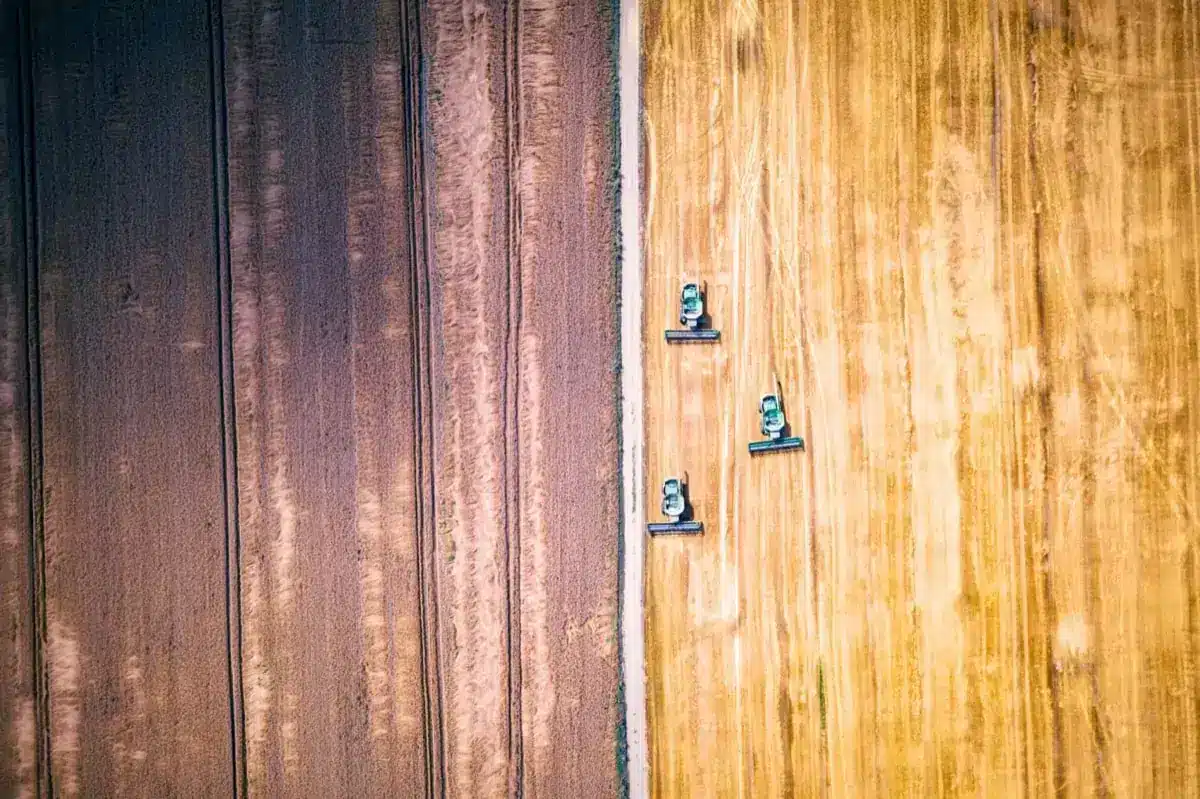
    Currently, precision agriculture is one of the most important sectors in which drones are involved. There are some fundamental factors that have influenced the progressive incorporation of this technology in agricultural work. These are:

    • The optimization of production and water resources.
    • The desertification of many areas of Spain.
    • The effectiveness of drones in agricultural crops.
    • The versatility of drones in all types of terrain.

    Another aspect to take into account is that these unmanned aircraft can access difficult to reach places in a fast and safe way and with absolute respect for the environment. If we add to this their accuracy in data collection and the fact that there is no risk for people, we are undoubtedly facing a very useful technological tool that will have more and more users in the future.

    What information do drones provide in agriculture?

    Drones in agriculture provide information of vital importance to the agricultural worker to know the performance of his farm. For example, he can know the areas of the plantation that are not growing as expected, either due to pests or lack of nutrients, count and identify the plants, monitor their growth and locate areas with weeds. 

    You can also know the water stress of the crop, i.e., the areas that need water and those that could have problems in the future. They also have the possibility of obtaining maps with the best places to plant one type of crop or another.

    The drone can carry different cameras to provide data of all kinds. For example, RGB cameras will always provide general information about the plantation, multispectral cameras focus more on the analysis of the plants or fruit trees and thermographic cameras on the state of the soil, i.e., if there is a water or nutrient deficit. In this way, it is possible to detect diseases in plants, fruits and vegetables to prevent them and improve the quality of the plantations. 

    Work that can be carried out by a drone in agriculture

    The adaptability of drones has made them a tool increasingly used by farmers, as they can do different jobs by simply changing their equipment. Here are some examples:

    Fumigation drones

    It is increasingly common to see drones spraying fields due to their high level of precision and speed, so that they can spray large extensions automatically. Spraying with drones leads to significant cost savings and reduces risks for people, for example, in the application of phytosanitary products.

    Crop monitoring

    Drones, equipped with special sensors and aided by artificial intelligence, are capable of surveying large areas of crops for pests, or checking the growth of fruit trees, barley, etc. All drones used for monitoring carry cameras with provision for manual adjustments and the possibility of installing different devices. 

    Field and crop monitoring

    Drones can detect water or fertilizer deficiencies with great precision in any type of crop. This work is very useful in vineyards to correct any problems detected in the vines as soon as possible. The drones use night vision IR sensors, thermal sensors and high resolution RGB with zoom.

    Planting work 

    Drones can carry out the work of planting a plantation much more quickly and accurately than a person, which is why farmers are increasingly using them. Drones usually carry an external compressed air charge system to disperse the seeds and they are usually encapsulated to avoid any damage when they are spread on the ground. This procedure works very well in the reforestation of large areas.

    Main advantages of using drones in agriculture

    Thanks to the data obtained by drones, farmers can make much more precise decisions and design strategies to increase the yield of their plantation and also their profitability. These are the main advantages:

    – Manage possible crop water stress.

    – Decide in which zones to apply fertilizers or nutrients.

    • Detect pests or plant diseases.
    • Better planning of harvests and necessary treatments.
    • Improve crop quality.
    • Optimize costs.
    • Establish the areas of highest crop quality.
    • Generate historical maps to plan future harvests.
    • Monitor spraying.

    Although in principle the investment in drones can be high for the farmer, the savings in time and money are worth it and the profitability is more than appreciated in the medium and long term. For this reason, they have become a highly appreciated technological tool.

    More and more drone pilots are specializing in the field of agriculture because job offers in this field are growing. If you want to become one of them, contact us and get to know our drones for agriculture course. At UMILES University we have the best professionals for your training, we are waiting for you!

  • Drones for forestry use: everything you need to know

    Drones for forestry use: everything you need to know

    Drones have become an essential tool for forestry agents due to their great versatility and their ability to adapt to any type of terrain. In this post, we are going to see everything that a drone can offer in the forestry sector, not only at the level of recognition and mapping of the terrain, but also in everything related to the prevention and extinction of fires.

    Use of drones in forestry

    The job of foresters and forestry engineers is to monitor the state of forests and manage their assets in a sustainable manner. To get an idea of the work they do, to monitor 1,000 ha of forest with traditional methods requires the work of 20 people and more than a month to carry out the mapping of the area.

    However, a drone can do this work in much less time, since it provides 3D images of the site and allows a better identification of crops, detecting areas where vegetation grows better and with the storage and subsequent analysis of these data, better planning and periodic comparisons can be made. Undoubtedly, all these actions allow a significant cost reduction for the administrations. Let’s see some of the tasks that a forest drone can perform today:

    – Investigate the health of forests.

    – To elaborate inventories to classify and value the flora and fauna of the area.

    – Improve forest planning and management.

    – Provide rapid response on actions with environmental impact, such as illegal logging or storms, for example.

    – Provide land use mapping.

    – Assist reforestation.

    – Assist in the development of biodiversity in different production areas.

    – Provide ecological, biological and landscape characteristics of the site.

    – Prevent possible flood risks.

    – Detect diseases and pests of the flora.

    – Collaborate in minimizing negative environmental impact.

    – Analyze tree canopies.

    Drones in firefighting

    Preventive and firefighting tasks are the main functions carried out by forestry agents and drones are a great help to carry them out in the best possible way. UAS offer 3D and infrared aerial images that provide very important information when a fire has broken out. In this way, better decisions can be made.

    In addition, drones are also capable of analyzing, quantifying and assessing fire risks in a given area depending on its vegetation, so that prevention and preservation measures can be taken. 

    By means of photogrammetry, 3D models and maps of each area can be created with information of great value for experts, since any small change in the vegetation of the place can cause a balance in the ecosystem that can lead to a fire.

    Another important aspect of the work carried out by drones is that they can monitor forest fires at night because they transmit infrared images and videos in real time. In this way, firefighting specialists have up-to-date information to plan and make tactical decisions quickly.

    On the other hand, drones are also very effective after a fire, as the images they provide help in the regeneration of native vegetation and the conservation of biodiversity in the medium to long term.

    What equipment do forestry drones carry?

    The drones used for this type of work carry RGB sensors, multispectral, infrared and thermal cameras. In this way, they provide images that allow a more precise investigation of the vegetation in the area, in which possible diseases of the flora, areas where growth is slower, etc. can be detected. They can also measure temperatures, store and compare parameters recorded in another period of time. In the case of fixed-wing drones, they can carry out very wide routes and detect possible fire outbreaks in time to prevent them from spreading rapidly.

    In 2019, the Spanish government invested 83 million euros in fire prevention and extinction and among the troops used were 73 aircraft to load and unload water in the fire areas along with four drones that helped the technicians with their images.

    Any person who performs forestry work can be trained as a drone pilot, whether a forest management consultant, engineer or forestry agent. It can also happen that the companies in charge of these works hire a professional drone pilot specialized in forestry. 

    In any case, you should know that if you want to fly a drone you must join a drone pilot school that issues the certificates required by AESA, as is the case of UMILES. Once you have obtained the professional pilot certificate, you can specialize as a drone pilot in emergencies and security, which are those who work with the brigades of investigation and extinguishing of forest fires. Contact us for any questions or doubts.

  • Differences between a drone pilot and a drone operator

    Differences between a drone pilot and a drone operator

    Many people think that a drone pilot and a drone operator are basically the same and have the same skills, but this is not the case. Both can fly a drone, but there are some differences that are worth pointing out and this post will try to clarify them.

    That is why, if you have considered taking a drone pilot course and focusing your professional career on the world of unmanned aircraft, you will learn in detail all the particularities of the drone pilot and the drone operator to be able to better decide your future career.

    Drone pilot

    A drone pilot is a person who has all the theoretical and practical knowledge of drone flight and holds a valid certificate issued by AESA. He/she is able to design, plan and execute a drone operation within the category in which he/she can fly the aircraft.

    Drone pilots must be at least 18 years old, hold a valid aeronautical medical certificate and have passed the relevant theoretical and practical exams.

    Before the new European regulations came into force, it was not necessary to have an official certificate to fly drones for recreational purposes, you only had to do so in permitted areas, but nowadays, anyone who wants to fly a drone, regardless of its purpose, must have a certificate. In addition, new legislation delimits the geographical areas in which drones can and cannot be flown.

    Nowadays, any drone pilot who wants to become a professional drone pilot must be registered as a drone operator or work for a company in the sector that complies with the current legislation related to drone pilots. 

    In short, to become a drone pilot you need to meet the following requirements:

    – You must be at least 18 years old.

    – You must have completed at least one theoretical and practical course at basic levels A1, A3 and A2.

    – Obtain the certificate corresponding to the levels taken.

    – Obtain a Class 2 or LAPL medical certificate.

    – You can only work for one operating company.

    Drone operator


    A drone operator is someone who flies drones professionally, either on their own, setting up their own company or as a freelancer working for any client who wants to hire them.

    If you register as a drone operator, you have to meet a number of important requirements. These are: 

    – Hold a drone pilot certificate of at least the basic levels.

    – Draw up an aeronautical study detailing the activities you are going to carry out.

    – Fill in an A1 and A2 appendix.

    – Draw up an operations manual with the different configurations, safety measures, maintenance manual, steps to follow, records and any other information related to the drones that the pilot is going to use and the activity that he/she is going to carry out.

    – Document accrediting the drone or drones to be used in the work activity.

    – Civil liability insurance.

    – Establish a company or be registered with the tax authorities as a self-employed professional.

    If you do not comply with these requirements, the administrative penalties can be very high, so it is essential to invest the necessary time in complying with them before starting your career.

    Differences between drone pilot and drone operator

    The basic difference between a drone pilot and a drone operator is the activity to be performed and the remuneration, i.e. whether you are a professional or not. Even if a person has the official drone pilot certificate, it does not mean that he or she is a professional and offers his or her services to other companies. 

    If you want to take that step, then you will have to register as a drone operating company, or as a self-employed professional with AESA (Agencia Estatal de Seguridad Aérea), which is the body in Spain in charge of everything related to drones.

    If you still have any doubts, with the example we are going to explain below, we are sure they will be dispelled. In Spain, if you want to drive a car, you need a driving license issued by the General Directorate of Traffic (Dirección General de Tráfico). With this license, you can drive a number of vehicles. If you decide to drive others, you will have to obtain another license. However, if you want to be a professional driver, i.e. a taxi driver, lorry driver or something similar, you must work for a company or be registered as a self-employed professional in order to be able to drive without breaking the law.

    As you can see, although it may seem like a minimal difference, there are important nuances between a drone pilot and a drone operator. If you want to be a professional (drone operator) you will have to meet many more requirements than if you just want to fly drones. If you have any doubts, contact us and discover all the drone pilot courses that we offer and that will help you to become a recognized drone operator.

  • Where can I work as a drone pilot?

    Where can I work as a drone pilot?

    Nowadays, the profession of drone pilot is more and more in demand in most sectors and all students who complete our Professional Drone Pilot Course find a good job opportunity. 

    What was once a promising profession has become a reality and it seems that it will continue that trend in the future, therefore, many people are focusing on training to access a job market increasingly buoyant and full of opportunities.

    Jobs by sector

    Currently, the most in-demand drone pilot profiles are related to aerial photography, aerial rescue, emergency, surveillance, aerial videography and jobs related to science, agriculture and advanced technology. 

    The applications of drones are so wide-ranging that we should rather ask ourselves in which sector their technology is not yet applied. Let’s take a look at the most sought-after jobs:

    Jobs related to aerial videography

    • Production of professional, institutional, corporate and event videos.
    • All types of high-resolution audiovisual recordings.
    • Recording of films, documentaries and advertorials.
    • Advertising videos.
    • Videos requested by insurance companies.

    Work related to aerial photography

    • All types of professional aerial photography.
    • Corporate photography.
    • Photographs for events.
    • Photographs for promotions.
    • Photographs for institutional bodies (Autonomous Communities, City Councils, etc.).
    • Photographs for printing works.
    • Advertising photographs.
    • Photographs for photo banks.
    • Real estate photographs.

    Works related to control and surveillance

    • – Forestry controls.
    • – Road supervision.
    • – Control of occupational hazards.
    • – Fire prevention and control.
    • – Crop control.

    Work related to aid and rescue

    • – Aerial rescue with drones.
    • – Help in emergency teams.
    • – Assistance in extinguishing fires.
    • – Security and civil protection operations.
    • – Assistance in perimeter surveillance.
    • – Maritime rescue.
    • – Help in areas of difficult access.

    Work related to different sectors

    • Maintenance of installations.
    • Construction supervision.
    • Images for the media.
    • Training of sportsmen and women.
    • Sports events.
    • Delivery of orders.
    • Creation of elevation maps.
    • Creation of 3D surfaces and volumes.

    Work related to advanced technology

    • Supervision of solar panels.
    • Supervision of industrial surfaces.
    • Thermographic cameras on drones.
    • Cartography.
    • Multispectral cameras.
    • Photogrammetry.
    • Topography.
    • Geomatics.
    • Aerospace works.

    Works related to agriculture.

    • Works to preserve the environment.
    • Orthophotography.
    • Agriculture, spraying and crop control.
    • Production of vigour indices (NVDI).
    • Surface temperature monitoring.

    Science-related work

    • Archaeology.
    • Geology.
    • Climatology.
    • Oceanography.
    • Meteorology.
    • Forensic sciences.

    Use of drones in security and emergency forces

    Drones are increasingly being used to guarantee the safety of the population and for the security forces themselves. They are very useful in emergency situations, as they can obtain images from the air in a matter of seconds and provide valuable information for decision-makers to make decisions quickly.

    In the case of fires, they provide data to estimate the size of the fire, where it is heading and whether it could endanger people. Once the fire is over, they can also assess the damage and plan possible solutions.

    Drones are also widely used in the search for missing persons or hostage detection in kidnappings, with excellent results, as they have thermal cameras that can detect human presence over large areas of land, a task that would take days with human teams.

    The future of drones in Spain

    We can safely say that the unmanned aircraft sector is booming in Spain at the moment. More and more companies and institutions are opting for this technology to optimise their services and need qualified personnel to operate drones. 

    At present, Spain has almost 5,000 drone pilots, a figure far below the current demand in some sectors that have seen drones as a way to take a step forward and improve their products or services.

    It must be said that Spain, along with France, is the country that began to draft laws to regulate drones for purposes other than mere entertainment. Thanks to this precociousness, we now have a solid legalization that allows us to look to the future with optimism and hope.

    The government continues to encourage the sector and is going to promote a plan with numerous initiatives for the development of this technology. The aim is to place Spain at the forefront of Europe and the world in the use of drones in all sectors. In the coming years, some 100,000 new jobs are expected to be created worldwide for drone pilots.

    UMILES believes that training to become a drone pilot is a real job opportunity with a very promising future. We can help you by offering quality training with our advanced drone pilot course and the best experts at your disposal. Contact us with any questions you may have.

  • European drone regulation, how does it affect new drone pilots?

    European drone regulation, how does it affect new drone pilots?

    The legislation related to drones is constantly evolving due to the growing demand of companies and institutions wishing to hire their services, hence laws are being implemented at European level to be applied in member countries in the shortest possible time.

    The most recent European UAS (unmanned aircraft) regulation came into force on December 31, 2020 and currently affects all drones, whether autonomous or remotely piloted, regardless of their size or use. This regulation has the following Regulations:

    – Implementing Regulation (EU) 2019/947 consolidated which includes changes to Implementing Regulation (EU) 2020/639 and Implementing Regulation (EU) 2020/746.

    – Delegated Regulation (EU) 2019/945 consolidated which includes the changes from Delegated Regulation (EU) 2020/1058.

    These Regulations will be implemented little by little, but it must be remembered that, for the time being, Royal Decree 1036/2017 will remain partially in force, which is the one that regulates the use of drones in Spain and the national regulations will be applied in the transition periods that appear in the new European Regulation and in the operations that do not appear under the umbrella of the new rule.

    Changes in the new European regulation

    The new rules have been drafted based on the risks of the operations performed by drone pilots. The more dangerous the operation, the more stringent the requirements for the pilot and the operator will be. 

    These measures are focused on achieving greater safety and control over unmanned aircraft and trying to prevent drones from being considered by some people as mere toys. In addition, the complicated procedures that had to be done before to homologate pilots from other countries are facilitated, since the training is common among all Member States of the European Union.

    These are the main changes:

    – Drones are now called UAS (Unmanned Aircraft System).

    – A new classification of UAS is established according to their technical specifications, including the weight of the aircraft and the possibility of limiting speed and height.

    – All persons wishing to fly a drone, whether recreational or professional, will have to register.

    – All pilots are required to know the technical specifications of the drone they are flying.

    – Three operational categories are established according to the risk of the operation: open, specific and certified.

    – Geographic zones are defined for drone operations.

    Non EASA activities or services

    Something important to mention is that European regulations do not apply to Non EASA (European Union Aviation Safety Agency) activities or services, so operators performing this type of activities must comply with the provisions of Royal Decree 1036/2017.

    Non-EASA activities or services that are excluded are those performed by: part of military contingents, State Security Forces and Corps, search and rescue, border control, customs agents, coast guard and firefighters, etc., always under the control and responsibility of a Member State and undertaken in the general interest by or on behalf of a body vested with Public Authority.

    Currently in Spain many professionals work in national operations due to the work carried out by AESA (Agencia Estatal de Seguridad Aérea), which is the body in charge of regulating air safety in our country.

    What about drone pilot training?

    As we have seen, the new European drone regulation directly affects drone pilot training and certifications, as it establishes several changes related to the limitation of certain operations, along with the safety requirements they must comply with. The objective of these changes is the professionalization of a sector that is in continuous evolution and that wants to establish itself definitively as one of the most important technological tools of the immediate future.

    Training schools will have to adapt to the new regulatory requirements and must have all the necessary resources for the training of future drone pilots within the new legal and juridical framework.

    In UMILES University we have professional experts in drone operations who have extensive experience and have designed an advanced drone course fully adapted to the new regulations. Do not hesitate to contact us to solve any doubt.