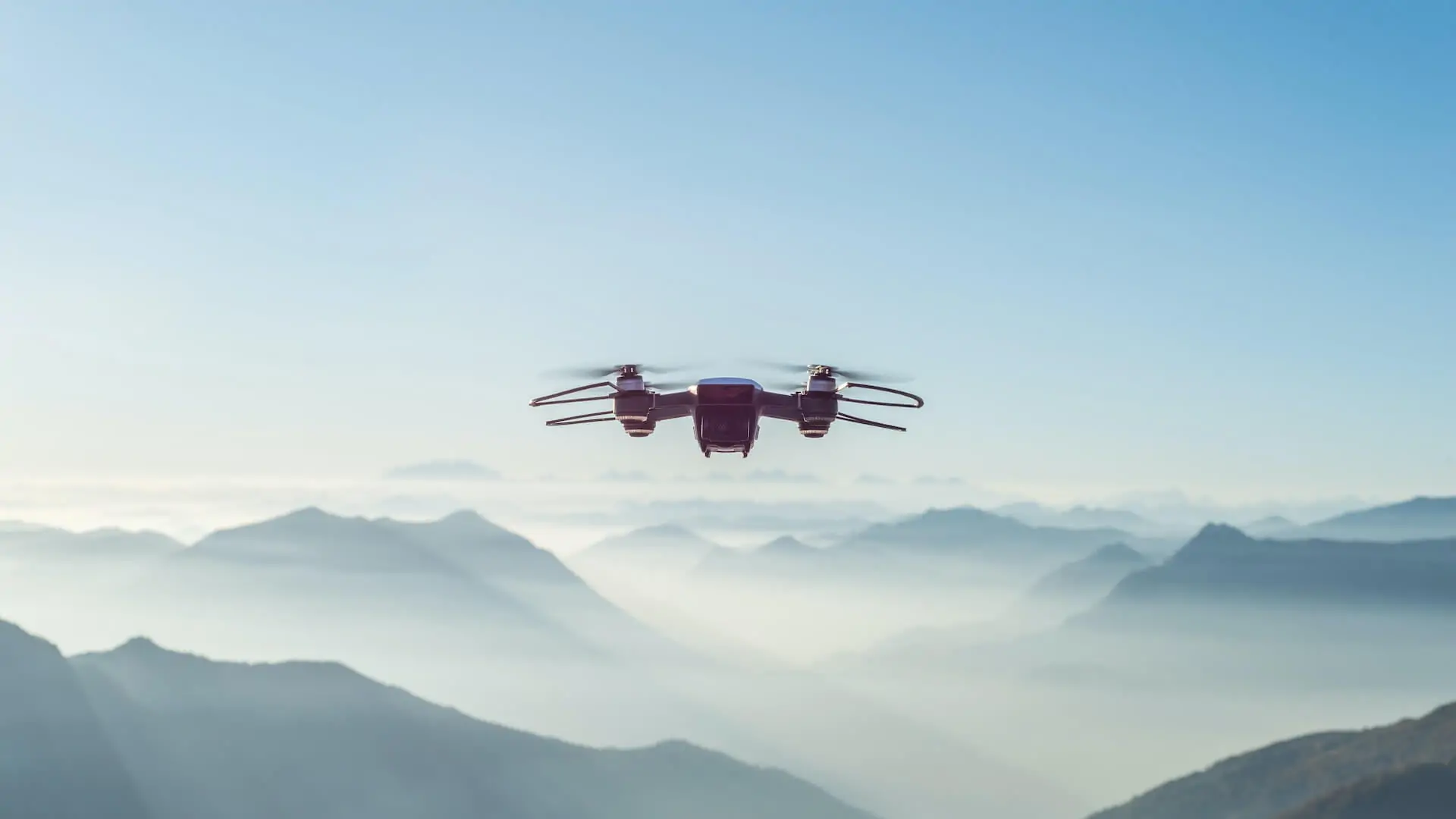
It is the question that always comes up, usually at the second meeting and almost always quietly: what if it rains that night? Anyone running an outdoor event already lives with that doubt for everything else, but with a drone show rain and wind weigh differently, because putting up a marquee does not help.
The honest answer has two parts. First: nobody can guarantee weeks in advance that the show will fly that night, and you should be wary of anyone who does. Second, and this is the part that matters: almost everything about what happens if it cannot fly can be decided weeks ahead. Who makes the call, by what time at the latest, which date is held in reserve, what is invoiced in each case and what the audience is told.
This article is about that second part. It is written for the organiser, not for the pilot.
Outdoor event on a date that cannot move?
Tell us where and when. We will explain how we would set up the fallback window in your case before we talk about figures or price.
Índice de contenidos
ToggleWho decides whether it flies, and why it is not you
A show with dozens or hundreds of drones over an audience is not a recreational flight. It falls into the specific category of the European framework, Commission Implementing Regulation (EU) 2019/947, which AESA applies in Spain and each national aviation authority applies in its own country. That regulation splits the responsibility very clearly:
- The operator, the company that flies, must set the procedures and the limitations for each type of operation.
- The remote pilot, before starting the flight, must ensure that the operating environment is compatible with the authorised limitations and conditions. And during the flight, must comply with them.
In practical terms, on the night: the decision to fly or not is made by the pilot in command, on technical grounds, within the limits set by that operation’s authorisation and the operator’s procedures. It is not a commercial decision, it is not put to a vote and it is not negotiated next to the stage. Neither the organiser, nor the mayor, nor the client paying for it can order the show to fly.
That may sound like losing control. It is the opposite: it takes the worst decision of the night off your shoulders. What is yours is what happens with that decision, and that is prepared beforehand. The rest of the aeronautical side is covered in drone show permits: who handles what.
Which conditions count
It is not only rain. Four factors are checked, and each one works differently.
Wind
It causes more suspensions than anything else, and it is the most deceptive from the ground. The wind you feel in the square is not the wind at the height where the figures fly, which is usually stronger and more irregular. The concern is not just the average strength but the gusts: a formation holds because every drone keeps its position precisely, and the more wind there is, the harder the motors work to do it and the more battery goes into it.
Rain
It affects the equipment and the operation, and it has a side effect people forget: even if the show could fly, the audience is taking cover and the figures read worse through water. Drizzle, a passing shower and steady rain are not the same thing, and each fleet tolerates what it tolerates.
Fog and low cloud
A drone show is light drawn in the sky. If there is fog or the cloud base is low, the figures end up inside or above the cloud and the audience sees nothing. Visibility is also a condition of the operation itself, not just of the show.
Thunderstorms
With lightning in the area, nothing flies. This usually coincides with the event’s own safety decision, which may have to clear the audience area anyway.
Why we do not give you a number
Because there is no single number that works for every case. Wind and rain limits are set by the manufacturer of the fleet for those specific aircraft, and the operation’s authorisation pins them down for that site and that flight. They change with the drone model, the height of the figures, the surroundings and the design itself. A figure in an article would be wrong for part of the shows out there. The one that matters is the one for your operation: ask your supplier for it in writing.
The reserve date is agreed before signing
What window there is on the night, which date is held in reserve and what is invoiced in each case. Left for the night itself, it gets argued in a hurry with the audience waiting.
When the call is made
The decision is not a moment, it is a sequence. It is worth knowing, because each stage has something for you to do.
The days before
The forecast is followed. It is for preparing, not for deciding: a forecast several days out is wrong often enough that nothing should be cancelled on it. What is useful at this stage is starting the conversations: with the council or the venue about the reserve date, and with your communications team about the two possible messages.
On the day
The crew sets up and measures conditions on site, which is where they really matter. The final decision is taken as late as two things allow: the set-up itself and the time you need to tell the audience. So the useful question is not «when will we know if it flies?» but «what is the latest time you will tell us?». That time is agreed beforehand, in writing.
The same-night window
Sometimes the problem is a shower or a gust that passes. If the programme allows it, a margin can be agreed on the same night to wait for things to improve before moving to the reserve date. That margin has a cost for you —an audience waiting, closing times, staff— and it is worth deciding in advance how far you are willing to stretch it.
How it goes into the contract
Why the contract has to say what happens if the show cannot fly is covered in hiring a drone show: who decides and what gets signed. This is the detail of that clause, which is where the gaps usually are. It should settle these points:
- Who decides and on what basis. The pilot in command, within the limits of the operation. Written that way, nobody argues about it on the night.
- The decision deadline. The latest time you will be told whether it flies, compatible with your plan for telling the audience.
- The same-night window. Whether there is one and how long it lasts.
- The reserve date. Which one, whether it is confirmed or only proposed, and until when it is held.
- What is invoiced in each scenario. If it flies on the reserve date, if it flies on neither, and which part of the work already done —design, paperwork, travel, set-up— is charged in each case.
- What the paperwork covers. Ask whether the reserve date is included from the start or would have to be processed separately.
And there is a part that is not in the contract with the supplier but decides whether the reserve date really exists: yours. The space has to be available on that other night, the event’s own permits —use of public space, road closures, hours— have to cover it, and security, sound and staff have to be repeatable. A reserve date the venue cannot give is not a reserve date.
What to tell the audience
This is where a postponement goes well or badly, and it depends almost entirely on the organiser.
- Say from the start that it depends on the weather. In the programme, on the posters, on the website. One sentence is enough. People who read it beforehand do not feel misled if it is postponed.
- Announce the reserve date together with the main one. That way the postponement is a plan that already existed, not a problem.
- Say when and where it will be confirmed. One official channel: the event’s social media, the website or the PA. With three channels you get three versions.
- Have both messages written in advance. «It is on» and «it is postponed», with the new date and time. Statements written in a rush are the ones that generate complaints.
- Give the reason in one line. «For safety reasons, it cannot fly in this wind» lands better than «circumstances beyond our control».
What you should avoid is leaving the audience waiting with no information while the call is made. That is why the decision deadline above is not a contractual detail: it is what lets you tell people in time.
If you would rather not depend on the sky
Some formats take the weather out of the equation. Indoor shows run in arenas, halls or exhibition centres with enough height, with an adapted fleet, and depend neither on the weather nor on nightfall. They will not work for a city festival, but for a corporate event on a fixed date they sometimes solve everything.
Outdoors, the other lever is the date: choose the show date with the reserve date in mind, not the other way round.
Frequently asked questions
Can a drone show fly in light rain?
It depends on the fleet and on that operation’s authorisation, and the pilot in command decides based on the real conditions on the night. Nobody should promise it to you in advance.
Can I ask for it to fly even if the pilot says no?
No. Complying with the limits of the operation is the pilot’s responsibility by law, and no contract can shift it onto the organiser.
What if the forecast is bad and then it does not rain?
That is exactly why nothing is cancelled on a forecast days out. It is followed, the messages are prepared, and the call is made on the day, at the agreed time.
Is a postponement free of charge?
It depends on what the contract says, which is why it has to say it. Part of the work is already done even if the show does not fly, and each supplier handles it differently. Ask before signing, not after.
And if what worries me is my own drone?
That is a different conversation, and we have it in can you fly a drone in the rain?
What to have settled
If you are organising outdoors, rain and wind are not avoided, they are planned for. Get to the signature with three things clear: who decides and by what time at the latest, which date is held in reserve and whether your venue can give it, and what is invoiced in each case. With that, a night of bad weather is an orderly postponement, not a crisis.
Write to us with the date and the place and we will look at your case. Or see first how we work on drone shows.
We talk about plan B before the figures
- ✓We design, build and fly our own drones: we do not subcontract the flight
- ✓Full management of permits with the aviation authorities
- ✓More than 500 shows in more than 15 countries
- ✓We explain what happens if it cannot fly before you sign
Already have a date and a place? Tell us about your event