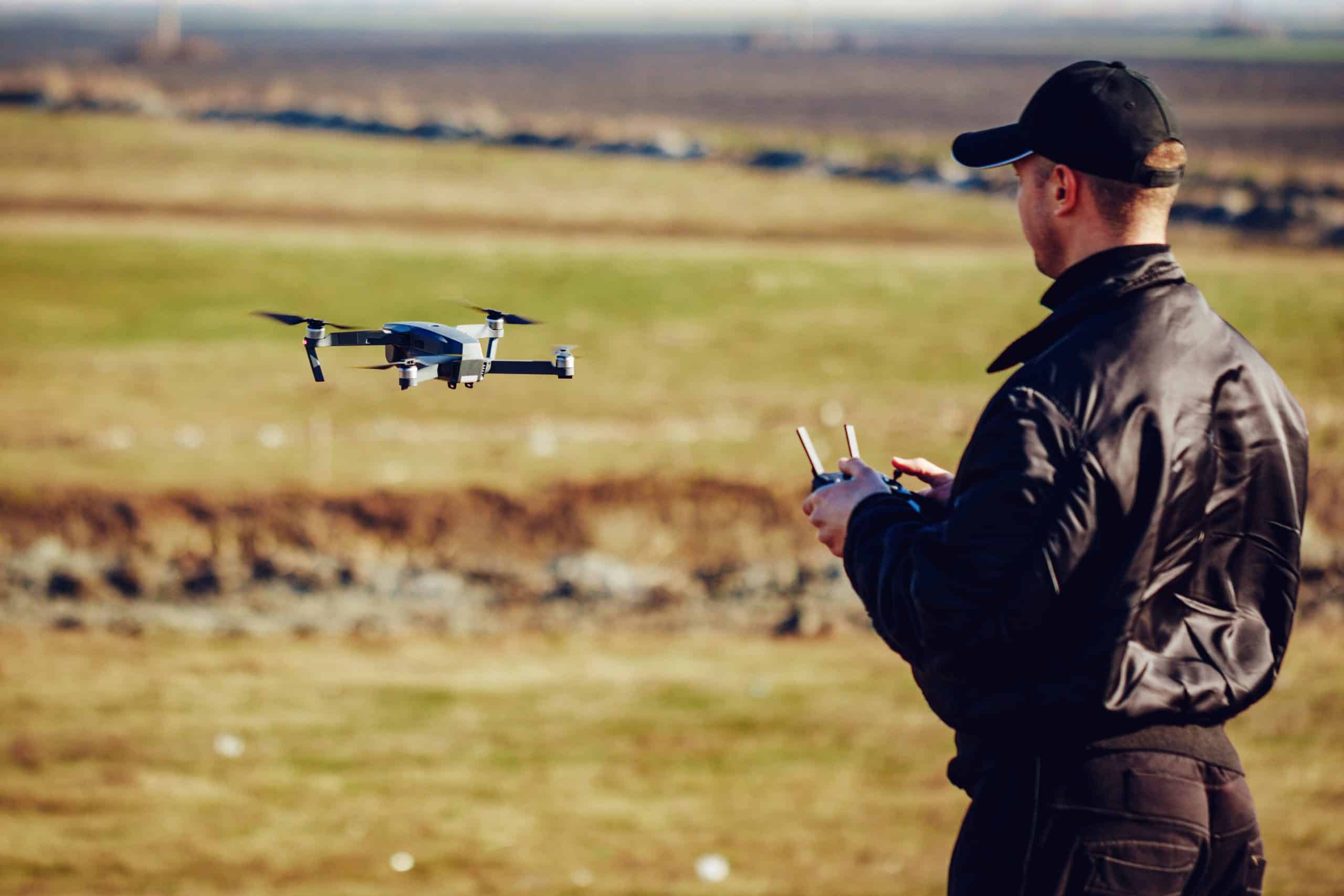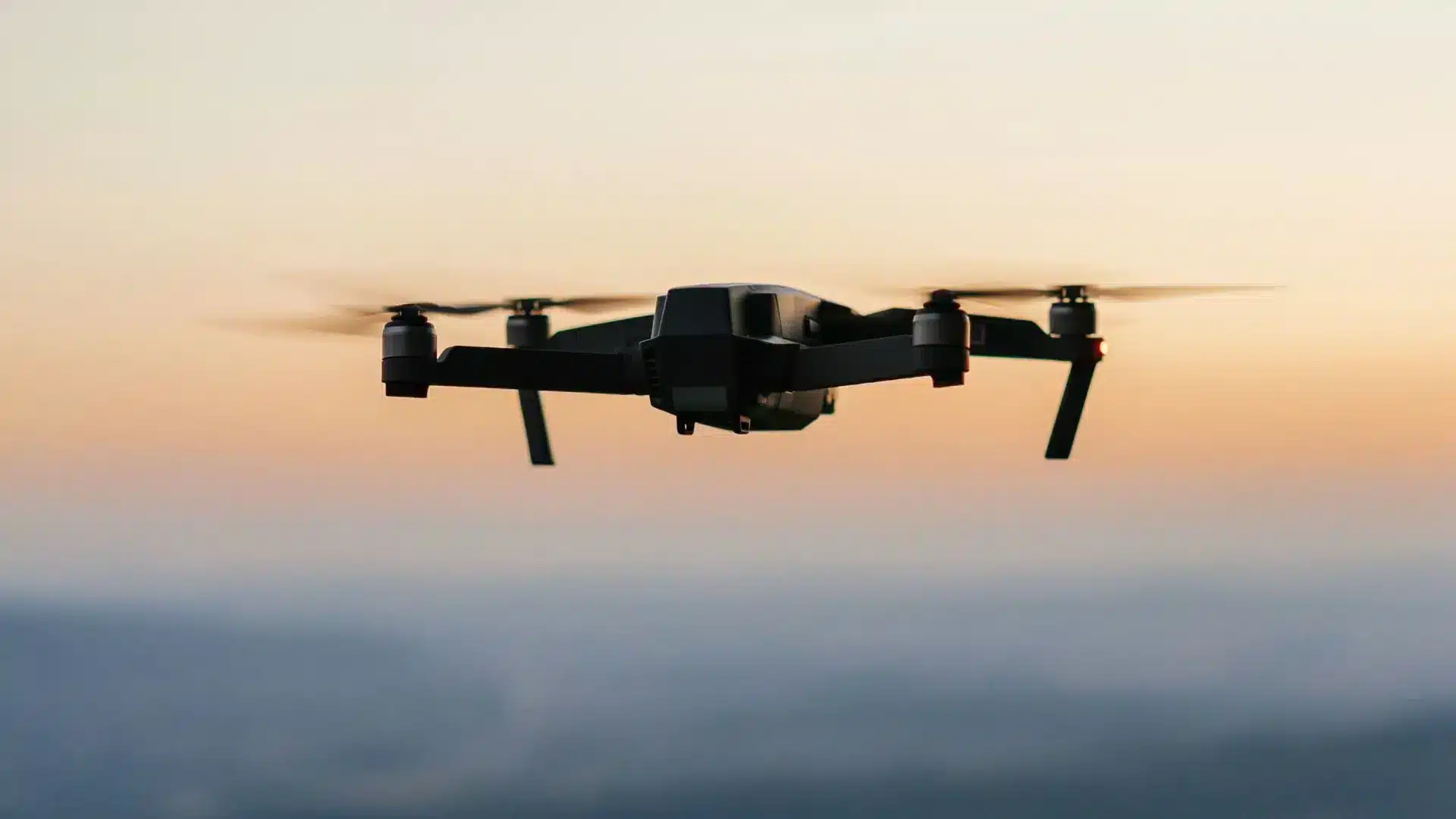
Among the things you have to get comfortable with while learning how to fly a drone are the movements the aircraft makes depending on how you work the sticks. If you have spent any time around UAS, you will have heard the terms roll, pitch and yaw. They are the three basic movements in flight, and getting them into your hands is what unlocks everything else the aircraft can do.
Here is what each of the three movements a drone can make does, and how to control them cleanly.

You can read the three axes; you have to fly them
Roll, pitch and yaw take a paragraph to explain and a few hours on the sticks to internalise. On our pilot course those hours happen with an instructor beside you.
What is roll?
Like aeroplanes, drones can rotate about their own axes in three different directions. Roll is the movement to the right or the left about the aircraft’s longitudinal axis.
In practice, that means the drone banks to the right or to the left in flight, as seen from behind it.
How to roll a drone
To learn the movement you first need to understand the layout of the transmitter. In most cases drones are flown with a controller that has two joystick-style sticks, one on the right and one on the left.
To roll the aircraft, move the right stick left or right, depending on which way you want the drone to move. Push it right and the propellers bank the drone to the right; push it left and it banks the other way.
In wind, all three work at once
Holding a frame through a gust means correcting roll and yaw together without thinking about it. That only comes from real flight hours, which is why our practical sessions include windy days.
What is pitch?
Pitch is the movement that tilts the drone nose-up or nose-down so that it moves forwards or backwards — rotation about the lateral axis.
How to pitch a drone
Pitch is controlled with the right stick as well, but by moving the joystick up or down. That is what sends the drone forwards or backwards.
What is yaw?
The third movement is yaw: rotation about the vertical axis. The drone turns on the spot, clockwise or anticlockwise, which is how you sweep a shot while filming.
Which stick controls yaw?
For yaw you use the left stick, moved left or right. Push it right and the drone turns clockwise; push it left and it turns anticlockwise.
These steps can vary across types of drone, because the transmitter can be configured differently. In Mode 2, which is the common setup, everything above applies as written. It is also worth knowing how far and how high a drone may fly so you stay inside the limits set by the drone regulations in force in Spain.

Becoming a skilled drone pilot
If you want to fly properly rather than by feel, get in touch and train with our professional drone pilot course at UMILES University. It covers what you need to work as a drone operator and to specialise in a field that keeps growing.
The uses of drones keep widening — to the point where drone light shows are replacing traditional fireworks — alongside a great deal of monitoring, surveillance and security work.
You have the theory. Now the sticks
- ✓Training approved by AESA, the Spanish aviation authority
- ✓Real flight practice, not just theory
- ✓In-person classes in Madrid
- ✓We tell you which path fits you, no strings attached
Not sure which path fits you? Tell us where you are and we will point you to the right one.