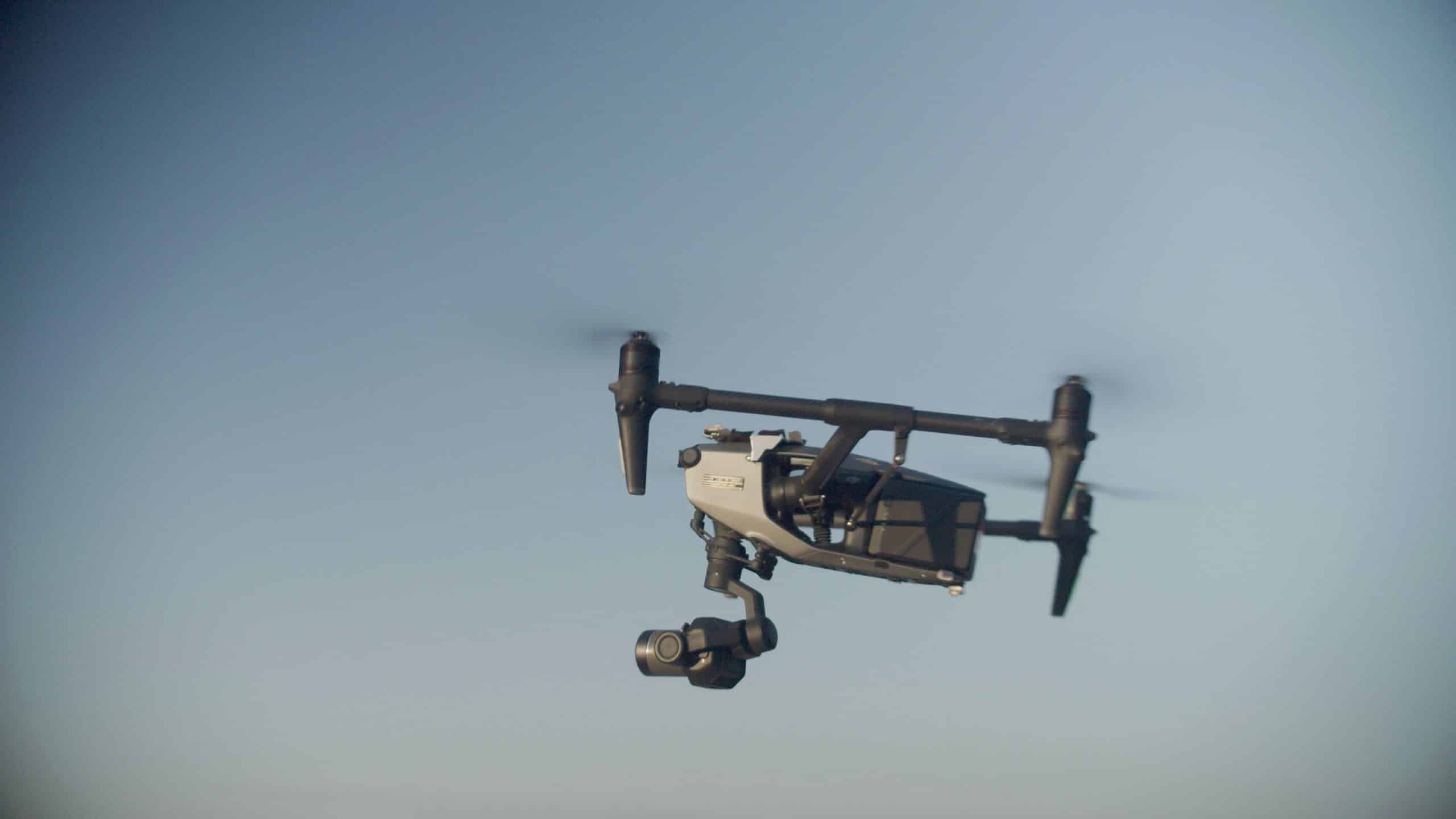
There is an idea going round the Spanish countryside that costs money to anyone who believes it: that all you need is to buy a spraying drone and hold a pilot licence to start treating crops. It does not work like that. The aerial application of plant protection products in Spain is prohibited as a general rule and can only be done through an exceptional authorisation granted by the regional government, treatment by treatment.
That does not mean you cannot work with drones in agriculture. It means you have to separate two things that get mixed up constantly: flying over a crop to obtain data, which is a perfectly regulated and fast-growing activity, and releasing product from the air, which is a separate regime with its own chain of requirements.
This article explains exactly where the line is, what it takes to cross it legally, and which part of all this is aeronautical and which part is not.
Read this before buying a spraying drone
The aeronautical side and the plant health side are two separate procedures, handled by two different authorities. We will tell you which one applies to you.
Índice de contenidos
ToggleThe starting point: aerial application is prohibited unless excepted
The framework comes from the European directive on the sustainable use of pesticides, transposed in Spain by Royal Decree 1311/2012. Its logic is that aerial application disperses product in a less controllable way than ground application, with more risk of drift towards inhabited areas, watercourses or neighbouring crops. So it is prohibited as a rule, with one narrow door left open.
That door is the exceptional authorisation, and the conditions are demanding:
- It must be justified that there is no viable ground alternative in technical and economic terms, or that the aerial route offers clear advantages in terms of lower impact on health and the environment.
- It is granted by the competent body of the regional government, not by AESA nor by the ministry.
- It is applied for per treatment, accompanied by an application plan with the content the royal decree itself requires. It is not a general licence you obtain once and that covers the whole season.
And there is a prior filter that kills many projects before they start: the product must be authorised for application by aerial means in its own registration. If the label does not provide for it, no authorisation is possible however well organised the rest may be.
A small drone is not outside the regime
This is the most widespread confusion. The rule does not talk about aeroplanes: it talks about aerial application. For plant health purposes, a spraying drone is a plant protection application device that also happens to fly. Both sets of rules apply to it: what is required of any treatment equipment and what is required of any aircraft.
That double condition is what explains the list that follows.
The four requirements on the agricultural side
1. Applicator licence and ROPO registration
Whoever carries out the treatment needs the applicator training provided for in Royal Decree 1311/2012 and must be entered in the ROPO, the official register of producers and operators of plant protection means. It is a plant health requirement, managed by each region’s agricultural administration, and it has nothing to do with a drone pilot qualification.
It is worth underlining because it causes misunderstandings: no aeronautical school, ours included, issues the applicator licence. They are two parallel routes and both have to be completed.
2. The drone, registered as agricultural machinery
The equipment must be registered in the official register of agricultural machinery (ROMA/REGANIP), with its technical data: model, tank capacity, spraying system. Just like a trailed mist blower.
3. A valid ITEAF inspection
As application equipment, it is subject to the periodic ITEAF inspections regulated by Royal Decree 1702/2011. Without a valid inspection certificate, the authorisation request falls.
4. The application plan
This is the document accompanying each request, setting out what is going to be treated, with what, when, under what conditions and with what measures to limit drift and protect sensitive areas. It is the piece the administration assesses and on which the exception depends.
And the aeronautical side, which is the other key
Everything above is plant health. The aeronautical half is still missing, handled by AESA, and it is met in parallel, not instead.
A spraying flight is, by definition, a risky operation: you fly low, close to obstacles, with a variable load, and the product itself is a factor. That places it outside the open category and inside the specific category, with the corresponding risk assessment and operational authorisation. In this type of operation it is not enough to rely on a standard scenario without further analysis: the nature of the load and the flight profile force a case-by-case study.
And here comes this year’s change, which affects anyone operating under a standard scenario: since 1 January 2026, declarations under the national STS-ES scenarios are no longer valid. The European ones in force are STS-01 —flight within visual line of sight over a controlled area in a populated environment, with a C5 class drone— and STS-02 —beyond visual line of sight, with observers, in a sparsely populated environment, C6 class—. Both require the STS theoretical knowledge certificate issued by AESA.
Add what applies to any professional work: registration as a UAS operator and civil liability insurance. And bear in mind that flying without meeting this is not a minor irregularity: the aeronautical penalty regime is serious, as we go through in fines and penalties for flying drones in Spain.
The double key, in short
- AESA authorises the flight operation: whether you can fly like that, there and with that aircraft.
- The regional government authorises the treatment: whether you can release that product, on that plot and at that moment.
Without either of the two, the work cannot be done. And they are different authorities, with different timescales and different criteria.
The part you can start today
Aeronautical training and precision agriculture training do not depend on any seasonal authorisation: they are yours and they already let you invoice.
What you can do today without an exceptional authorisation
Here is the part almost nobody tells you about, and it is what sustains the real business of most agricultural drone operators in Spain: everything that does not involve releasing product.
- Vigour maps and vegetation indices with a multispectral camera: spotting where the crop is suffering before the human eye can.
- Early detection of pests and water stress, which then allows a targeted ground treatment instead of a blanket application.
- Plant counting, gap control and yield estimation.
- Support for precision agriculture: variable rate prescriptions that ground machinery then executes.
- Sowing and reforestation, a different case from plant protection products.
This block is immediate business, is not subject to the exception regime and, in practice, is what makes the specialisation profitable while aerial application remains an occasional case authorised one by one. If you want the general picture of drone use in the field, it is in drones in agriculture: what they are used for.
What training you need, and in what order
Ordered from what you can start today to what depends on third parties:
First, the aeronautical base. Open category, and above all the STS certificate if you are going to operate in specific. It is yours, and it does not depend on any seasonal authorisation. It is covered in the professional drone pilot course and in the STS certifications course.
Second, the agricultural specialisation. Sensors, indices, flight planning over a plot, interpreting what the multispectral returns and producing the deliverable the farmer or the cooperative can use. That is the precision agriculture course, and it is the part that already lets you invoice.
Third, if you are going to treat: the plant health route. Applicator licence, ROPO, ROMA/REGANIP and ITEAF, through your region’s agricultural administration.
And in parallel, if you go freelance: the paperwork. Operational authorisations and coordination are what delay projects most.
A final warning about what you read out there
This is a moving area: some regions have processed authorisations for specific cases, there are trials under way and the sector is pushing to adapt a framework written before this kind of aircraft existed. Any article —this one included— ages. Before committing to a season, confirm the criteria in force with the plant health service of your region, which is who grants or refuses.
What does not change is the part you can start building right now: the aeronautical training and the precision agriculture one. If you want us to tell you where to start depending on where you come from —farming, machinery or from scratch—, tell us. And if you are still choosing a specialisation, in which drone course you need depending on what you want to do they are all compared.
From farming, from machinery or from scratch: we tell you where to start
- ✓Training approved by AESA
- ✓Real flight practice, not just theory
- ✓In-person classes in Madrid
- ✓We tell you which route fits you, no strings attached
Would you rather we guided you first? Tell us your goal