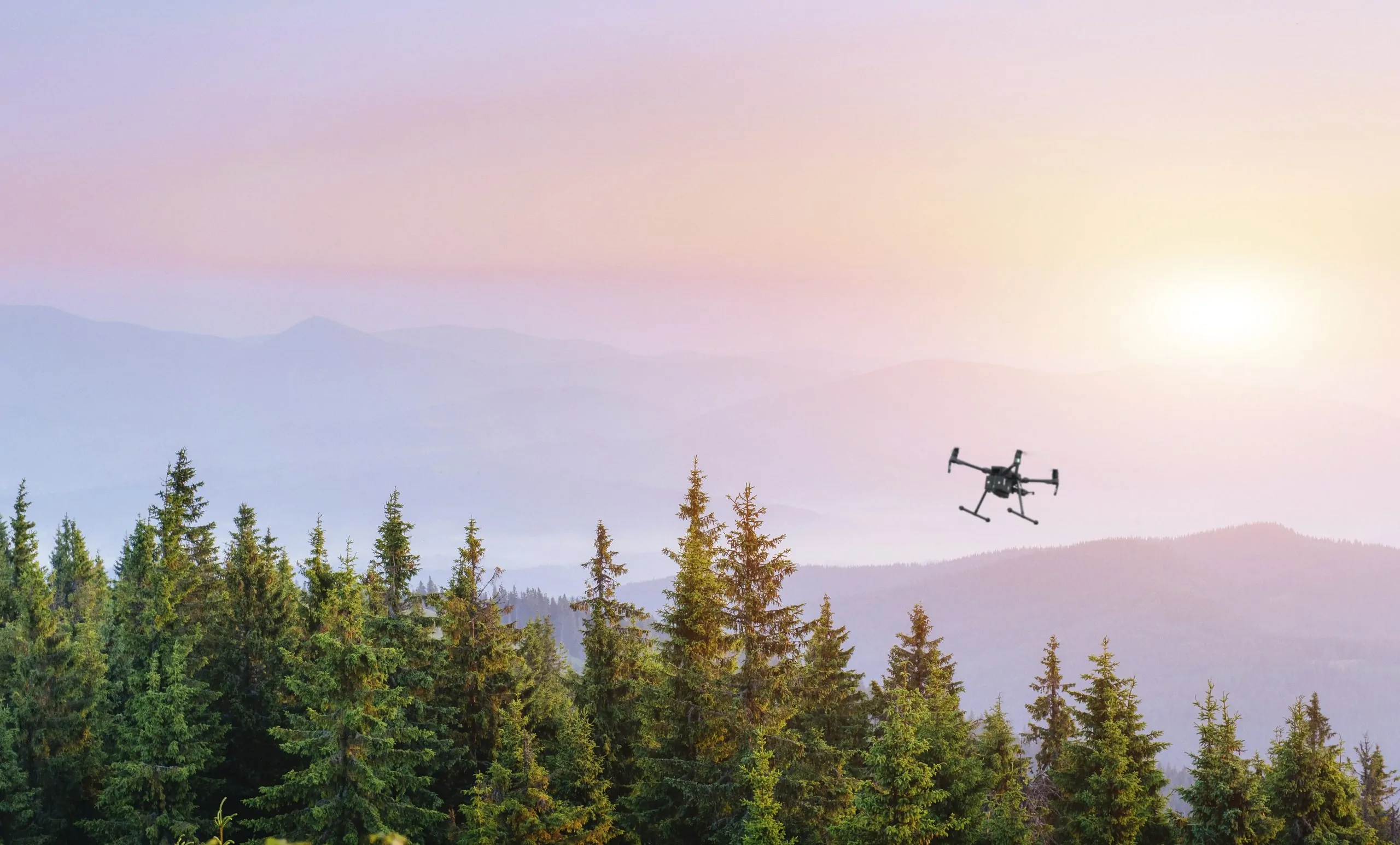
In emergencies and security, the drone is not used because it looks good on video. It is used because it gets there first and sees what a person cannot: at night with a thermal camera, from above over a fire, across ground a team on foot would take hours to reach. That is why it is one of the specialisations people feel most strongly about, and also one of the least understood as a career.
The question from anyone considering it tends to be the same: who hires a drone pilot for this, what happens in a real operation and what training is needed? This article answers those three things from the point of view of the trade, with Spain’s rules as the reference. If what you are looking for is the technology UMILES develops for security forces and emergency services, it is at UMILES Global Solutions.
Coming from fire, civil protection or security?
The course does not teach you your trade: it teaches you to bring the drone into it. Searching for people, thermal camera, command post and drills in controlled settings.
Índice de contenidos
ToggleWho works with drones in emergencies and security
Three worlds live under the same label, with very different rules of entry. It is worth telling them apart before training, because the training is similar but the path to work is not.
Public emergency and security services
Fire brigades, civil protection, police, rescue services. They carry out most operations of this kind and have made the drone part of their daily work. Entry into those services goes through their own route —competitive public exams for professionals, volunteering in many civil protection groups— and no course gives you a post. What training does give you is the specialisation: whoever is already inside, or gets in, arrives knowing how to use a drone within an operation.
Civil operators working with the authorities
Companies and pilots who provide drone services and who, in certain situations, work for a public authority or at its request. As we will see in the legal section, Spanish law expressly provides for that collaboration in disasters, under conditions.
Private security
Perimeter surveillance of large facilities, support at events, monitoring of construction sites or industrial plants. Here the drone is one more tool of the security service, and what matters is fitting it into the surveillance operation without stepping outside aviation rules.
What happens in an operation
The emergency pilot is not there to take pictures but to give information to whoever makes the decisions. The drone is a sensor serving the command, and the pilot is part of a chain with a person in charge, a plan and a timeline. The most common jobs:
- Searching for people. Systematic sweeps of an area, often at night, with a thermal camera to find a heat signature among vegetation or in open ground. The image is streamed live to the command post so ground teams go straight to the exact point.
- Fires. Tracking the advance of the fire front, finding hot spots once the fire is under control and informing decisions about where resources go.
- Disasters and serious accidents. The first overall picture of the affected area, marking out intervention zones and supporting the set-up of the forward command post.
- Surveillance and escort. Perimeter control of a site, following an operation or overseeing an event, where the drone covers what fixed cameras cannot see.
What they have in common is pressure. You fly in weather you did not choose, at night, with radio traffic and people waiting for the image. That is why this specialisation also trains stress management, and it is not decoration in the syllabus.
The sensor that matters: the thermal camera
As in inspections, the aircraft is a carrier and what decides the operation is what it carries. In emergencies the thermal camera is the central tool: it finds people, hot spots and sources that do not exist to the naked eye. Reading a thermal image correctly, and knowing when it misleads, is part of the trade. In drone inspection work we explain why not every thermal camera will do when decisions depend on that image.
The legal framework is not the same for everyone
This is the point that causes the most confusion, and the answer depends on who you fly for.
If you fly for a public service, your operation falls under what Spain’s Royal Decree 517/2024 calls non-EASA activities. Its article 1.1.b defines them: customs, police, search and rescue, firefighting, border control, coastguard or similar activities carried out by bodies with public authority. Under article 12.1, the European drone regulations apply to these activities, with the exceptions and exemptions the decree itself sets for them. And article 16 sets sixteen as the minimum age to act as operator or pilot in these activities.
If you are a civil operator and the authorities ask for help, article 12.2 provides that, when public authorities request collaboration in disaster situations under Law 17/2015 on the National Civil Protection System, civil operators may act under the same conditions as non-EASA activities. They must be registered as operators and coordinate to minimise risks. The key is in the verb: when the authority requests it. Turning up at a fire with a drone on your own initiative does not fall under this provision and, besides, may interfere with the aircraft working in the area.
If you work in private security, the decree gives you no specific regime: you fly under the same rules as any civil operator, in the open or specific category depending on what the operation requires. Night surveillance, close to people or beyond the pilot’s sight, will hardly fit in the open category, and that is where the STS standard scenarios or an operational authorisation come in. On top of that comes something that is not aeronautical: images of identifiable people are personal data, and the EU General Data Protection Regulation applies to whoever captures them.
Learned in drills, not in a classroom
56 hours in person in Madrid, over 14 days across 3 weeks, with search and rescue, command post set-up and perimeter surveillance drills.
What training the trade requires
Three layers, in this order.
The aeronautical one. The pilot base and, for much private security work, the specific category. That is what the Professional Drone Pilot Course and the STS certificates cover.
Emergency operations. Knowing where the drone fits in an emergency plan, how a disaster area is zoned, how to work with a command post and how to write a report that is useful to whoever decides. It is the core of the emergency and security drone pilot course.
The sensor and the practice. Thermal camera, live feed to the command post and, above all, hours of drills. This is not learned in a classroom.
What the UMILES University course looks like
It was designed by the specialists at UMILES Global Solutions, the team that developed the SATURNO security and rescue drone, made in Spain. It runs for 56 hours, over 14 days across 3 weeks, in person in Madrid. The theory is split into eight modules:
- PAS, forward command post (PMA), zoning of emergency and disaster areas, and drones in emergency plans.
- Public and private security, rescue, firefighting and assessment reports.
- Symptoms of combat stress, survival and stress management.
- Counter-drone systems.
- Flight planning, applied software and report writing.
- Operations in emergency and private security situations.
- Thermal camera, live feed to the command post, and fires.
- Searching for people.
The practical part consists of drills in real but controlled settings: search and rescue of people, setting up a forward command post and its procedures, escort and perimeter surveillance, and rescue and salvage. In addition, a 56-hour security and emergencies specialisation is part of the second module of the Professional Drone Pilot Course, for those who want the full route.
What the course does not give you
A post. If your goal is a public service, the way in is its entry process, and the specialisation is what you bring with you. If your goal is private security or working as a civil operator, training is the direct door, together with the aeronautical certificates each operation requires.
If you are still torn between this specialisation and another, which drone course you need for the job you want compares them all, and drone pilot career paths covers the sectors that are hiring.
We will tell you where to start, depending on where you come from
- ✓Training approved by AESA
- ✓Real flight practice, not just theory
- ✓In-person classes in Madrid
- ✓We tell you which route fits you, no strings attached
Would you rather we guided you first? Tell us your goal